
As 2027 approaches, Medicaid Managed Long-Term Services and Supports (MLTSS) and Home and Community-Based Services (HCBS) programs are facing significant operational and financial changes under H.R. 1.
These changes come as states and health plans are already navigating rising Medicaid costs and growing pressure to manage resources effectively. According to research published in Health Affairs in 2026, Medicaid spending per enrollee increased 16.6% in 2024, partly reflecting changes in enrollment, greater healthcare needs, and higher provider payment rates.
These financial pressures extend to HCBS programs. A 2025 national survey of state Medicaid HCBS programs found that 11 states had adopted new waiver spending or enrollment caps for fiscal year 2026, highlighting efforts to manage program costs.
H.R. 1 adds another layer of change through reductions in projected federal Medicaid spending and new eligibility and administrative requirements. According to the Congressional Budget Office, the law's Medicaid provisions are estimated to reduce the federal deficit by approximately $887 billion over ten years.
For states and health plans, the priority heading into 2027 is balancing financial sustainability and accountability while protecting access to quality, person-centered care.
New Requirements and HCBS Opportunities
H.R. 1, signed into law in July 2025, introduces several Medicaid changes beginning in 2027, with additional provisions taking effect in 2028. Key changes include:
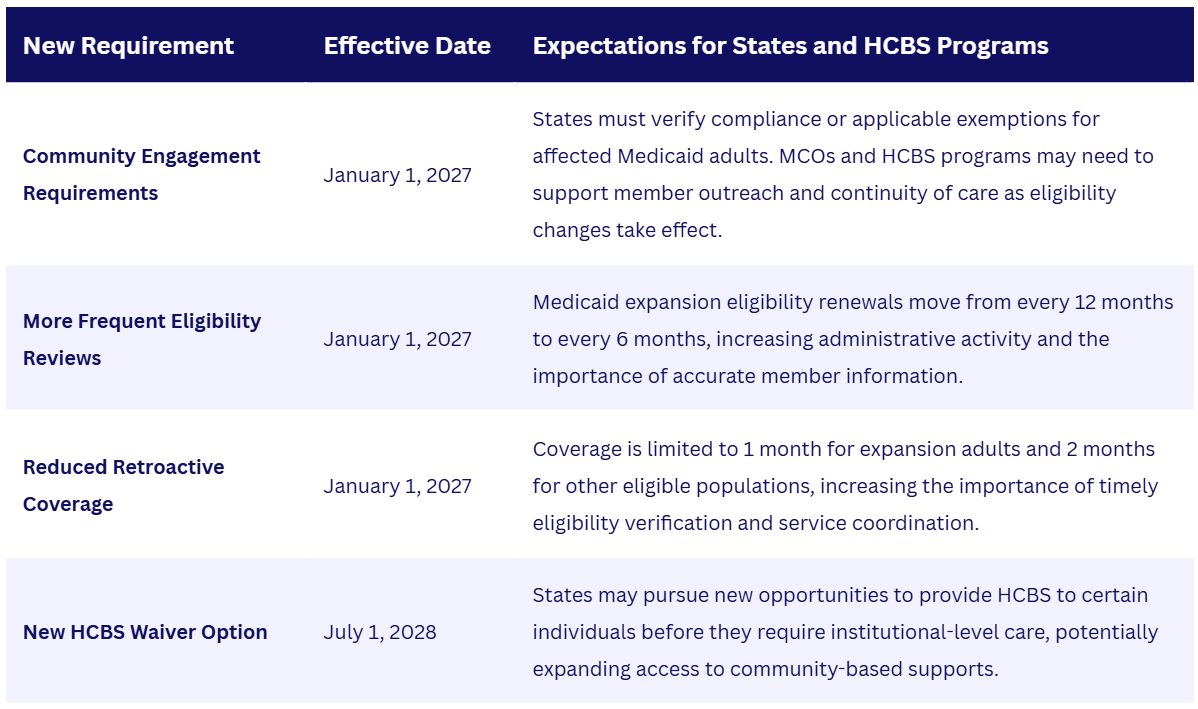
Sources: Centers for Medicare & Medicaid Services (CMS), H.R. 1 (Public Law 119-21), and the Center on Budget and Policy Priorities. Implementation dates and requirements reflect federal guidance as of November 2026.
These changes create new administrative responsibilities and opportunities for states to evaluate how they deliver community-based services.
Although certain eligibility provisions do not apply to all MLTSS and HCBS members, maintaining accurate member information, identifying applicable exemptions, and coordinating eligibility and services will be important to supporting continuity of care.
Strengthen Program Integrity Through Data and Technology
As Medicaid programs adapt to these changes, states and health plans need greater visibility into how services are assessed, authorized, and utilized to improve and maintain program integrity.
For MLTSS and HCBS programs, effective oversight begins with assessments that accurately reflect member needs and service authorizations that align with those findings. Inconsistent documentation, gaps in assessment data, and variations in service planning can contribute to inappropriate utilization, avoidable costs, and challenges in maintaining consistent care.
Working with a technology partner that understands the complexities of MLTSS and HCBS can help organizations:
- Improve Assessment Accuracy: Identify potential inconsistencies early, before they affect service decisions.
- Strengthen Utilization Management: Align services with assessed member acuity and flag exceptions requiring additional review.
- Make Reporting Actionable: Surface utilization trends, regional variations, and potential gaps to support better oversight and financial decisions.
- Streamline Operations: Reduce manual and duplicative work and support more consistent, efficient processes.
As highlighted in our blog, Why Assessment Accuracy Is Essential to Reducing Waste, reliable assessments are a critical foundation for appropriate service allocation and effective utilization management. When combined with actionable reporting and consistent workflows, states and health plans can better identify potential waste, strengthen program integrity, and make informed decisions that support financial sustainability and person-centered care.
Preparing for 2027 and Beyond
As H.R. 1 implementation progresses, states and health plans will need to adapt to evolving requirements while maintaining effective oversight and access to essential services.
Having the right technology partner will be increasingly important. Reliable data, actionable reporting, and consistent processes can help organizations respond to change, manage resources effectively, and make informed decisions for the members they serve.
QCSS Health helps MLTSS and HCBS programs improve assessment accuracy, strengthen utilization management, support appropriate service allocation, and gain greater visibility into program performance. Our solutions help organizations improve consistency, streamline operations, and support quality, person-centered care.